
As I stood in my kitchen, the warmth of the afternoon sun spilling in, I realized I had a treasure hidden in my fridge—leftover beef bulgogi! With just a few ingredients, I knew I could turn it into a heartwarming bowl of Korean Beef Bulgogi Stew that would chase away any chill in the air. This quick recipe doesn’t just save time; it transforms yesterday’s meals into a comforting delight, all in under 30 minutes. Imagine savoring tender marinated beef and chewy glass noodles swimming in a fragrant broth that warms the soul. Whether you’re hosting cozy dinners or simply craving a delightful homemade meal, this dish is sure to impress. Ready to bring some Korean charm to your dinner table? Let’s dive in!
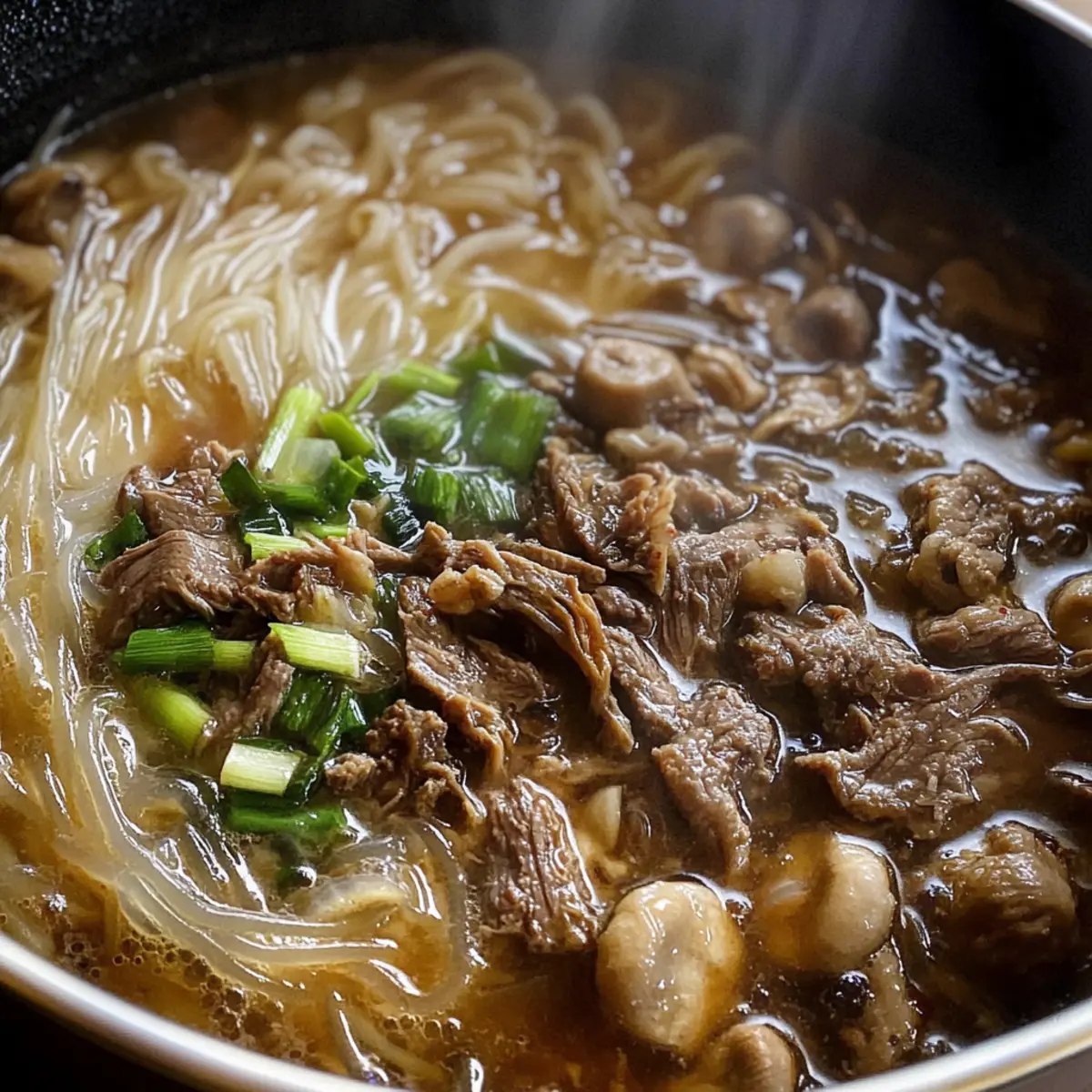
What makes this stew extraordinary?
Quick and Easy to prepare, this stew transforms leftover bulgogi into an impressive meal that’s ready in just under 30 minutes. Rich, Savory Flavors shine through with the melding of sweet-savory marinated beef and fragrant broth. Versatile at its core, feel free to swap in your favorite veggies or noodles for a tailored experience. Perfect for Cozy Nights, this dish not only satisfies hunger but also serves as an inviting comfort food. Pair it with Korean Chicken Bao for an unforgettable dinner gathering!
Korean Beef Bulgogi Stew Ingredients
• Dive into the deliciousness!
For the Stew
• Beef Bulgogi – transforms the dish with its sweet-savory profile; ideal for using up leftovers for added flavor.
• Sweet Potato Glass Noodles (Dangmyeon) – these chewy noodles soak up the broth beautifully; quick to prepare and gluten-free!
• Enoki Mushrooms – their tender texture adds an earthy touch; feel free to swap for your favorite mushrooms like shiitake.
• Green Onion – brightens the dish with a mild onion flavor; chives can be used if green onions are scarce.
• Water/Beef Broth – this forms the stew’s base, enhancing its depth; using beef broth elevates the flavor further.
• Sesame Oil – adds a lovely nuttiness to the broth; olive oil works in a pinch, but the flavor will change.
• Dark Soy Sauce – introduces umami and a hint of sweetness; crucial for balancing the richness of the beef.
Step‑by‑Step Instructions for Korean Beef Bulgogi Stew
Step 1: Soak the Noodles
Begin by soaking the sweet potato glass noodles in warm water for about 15 minutes, or until they are pliable. This step is vital as it ensures that the noodles cook evenly and absorb the savory flavors of the broth in your Korean Beef Bulgogi Stew. Drain the noodles and set them aside, ready to add to your pot.
Step 2: Heat the Bulgogi
In a medium pot, place your leftover beef bulgogi and turn the heat to medium. Stir gently as it warms through, which should take about 3-4 minutes. You want the beef to be heated thoroughly and release its wonderful sweet-savory aroma, filling your kitchen with warmth and inviting smells.
Step 3: Add Aromatics and Sauce
Once the beef is heated, drizzle in dark soy sauce and sesame oil, stirring everything together for 2-3 minutes. This will enhance the flavors of the Korean Beef Bulgogi Stew, allowing the beef to pick up the richness of the sauce. Look for the sauce to coat the beef nicely, creating a flavorful base for your stew.
Step 4: Incorporate the Broth
Next, pour in about 4 cups of water or beef broth, stirring well to combine. Increase the heat and bring your mixture to a gentle boil, visualizing the steam rising from the pot. This process should take about 5-7 minutes, with the broth melding with the beef flavors beautifully.
Step 5: Add Noodles and Mushrooms
Once boiling, carefully add the soaked glass noodles and enoki mushrooms into the pot. Stir gently to incorporate everything. Allow the stew to cook for an additional 3-4 minutes, or until the noodles are tender but still chewy. You’ll notice the broth thickening slightly as the noodles absorb its rich essence.
Step 6: Garnish and Serve
Finally, remove the pot from heat and sprinkle the chopped green onion on top, adding a burst of color and freshness to your Korean Beef Bulgogi Stew. Serve immediately, enjoying your heartwarming meal that’s come together in under 30 minutes, perfect for cozy nights in!
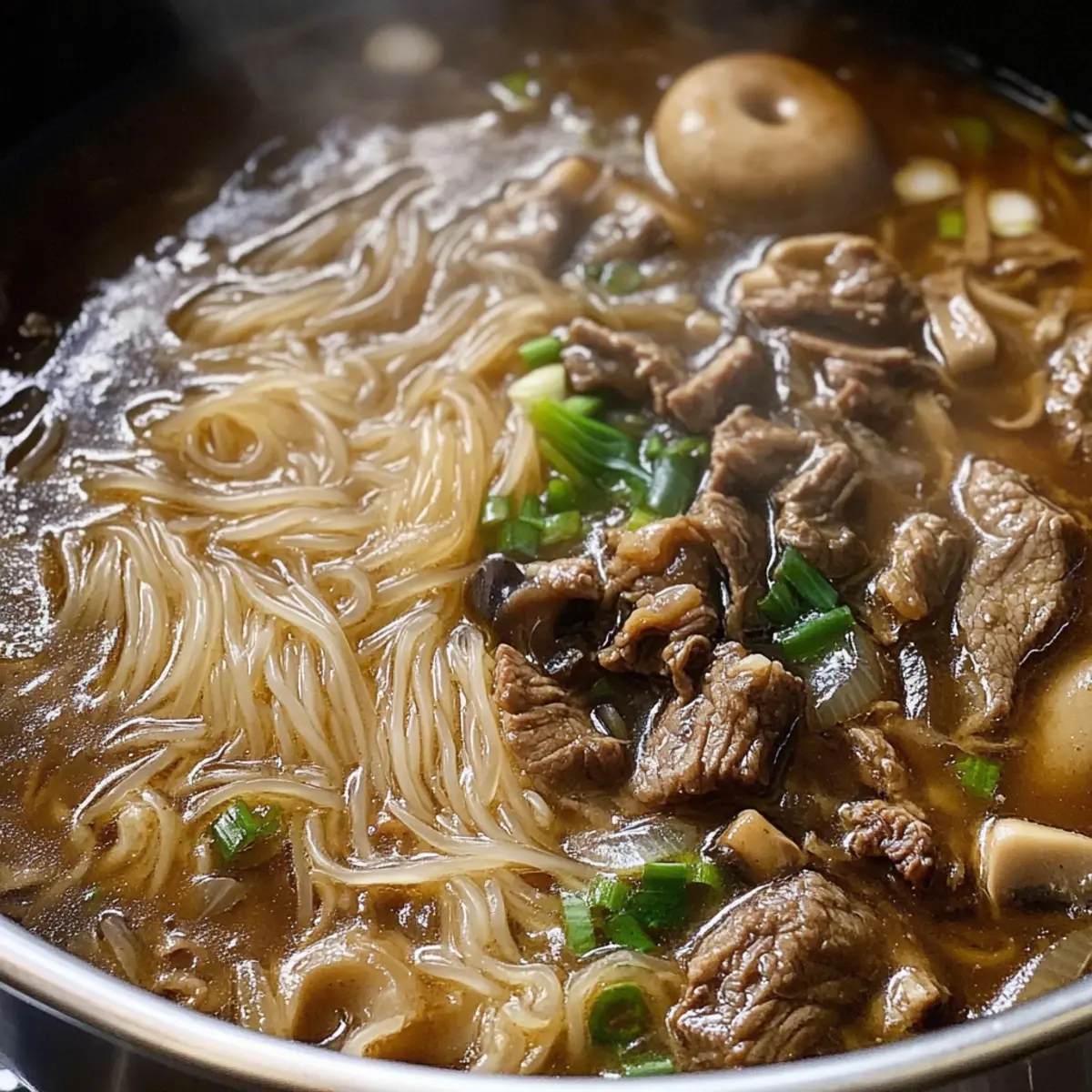
Korean Beef Bulgogi Stew Variations
Feel free to let your creativity flow and customize your stew to suit your taste buds!
-
Veggie Boost: Add bok choy or napa cabbage for a colorful twist and extra nutrients. These leafy greens will soften perfectly in the broth, enhancing each spoonful.
-
Noodle Swap: Experiment with other noodle types like ramen or udon. These will bring a different texture that could delight the entire family, and you may discover a new favorite!
-
Mushroom Magic: Swap enoki mushrooms for shiitake or button mushrooms. Each type offers a unique flavor profile, transforming your stew into a delightful experience.
-
Spicy Kick: Want some heat? Add sliced jalapeños or a pinch of red pepper flakes for a spicy kick. Just a little can make your dish sing with warmth and excitement!
-
Dairy-Free Option: If you’re looking to keep it dairy-free, simply omit any creamy toppings and stick with fresh green onions. This way, you’ll enjoy the same comforting bowl without compromising on flavor.
-
Nutty Variation: Incorporate toasted sesame seeds as a finishing touch. This extra layer of nuttiness complements the broth beautifully and adds a delightful crunch.
-
Add Tofu: For a vegetarian-friendly twist, toss in some cubed tofu. It will soak up all the delicious flavors of the broth, ensuring each bite is satisfying.
You can also explore a delightful pairing with Korean Chicken Bao or some flavorsome Korean Soy Garlic for an unforgettable meal experience! Enjoy customizing your Korean Beef Bulgogi Stew!
Storage Tips for Korean Beef Bulgogi Stew
-
Fridge: Store leftovers in an airtight container for up to 3 days. This keeps the flavors fresh and the noodles from becoming too mushy.
-
Freezer: You can freeze the stew for up to 2 months, but it’s best to store the noodles separately to maintain their texture.
-
Reheating: Reheat gently on the stove over medium heat, adding a splash of water or broth if the stew has thickened. This will revive its delicious flavor.
-
Enjoying Later: Always taste and adjust seasoning after reheating, as flavors can mellow during storage. Your Korean Beef Bulgogi Stew deserves to shine every time!
Expert Tips for Korean Beef Bulgogi Stew
• Use High-Quality Bulogi: Using leftover bulgogi greatly elevates the stew’s flavor. If made from scratch, ensure even marination for the best results.
• Prep Noodles Ahead: Soak the sweet potato glass noodles in warm water before adding them to prevent them from becoming gummy and ensure they cook evenly.
• Taste Before Serving: Always taste the broth before serving. Adjust the seasoning with more dark soy sauce or salt if needed for a burst of umami in your Korean Beef Bulgogi Stew.
• Don’t Overcook Mushrooms: Enoki mushrooms are delicate; add them towards the end of cooking to keep their texture intact.
• Customize Your Veggies: Feel free to add your favorite vegetables, like bok choy or napa cabbage, to enhance nutrition and flavor in your stew.
What to Serve with Quick and Easy Korean Beef Bulgogi Stew
Enjoying a heartwarming bowl of stew is even better when paired with delightful sides that elevate your meal.
-
Steamed Rice: A classic pairing, it soaks up the rich broth and balances the dish’s savory flavors. A fluffy bed of rice allows you to savor every bite!
-
Kimchi: This traditional Korean side dish adds a spicy, tangy crunch that brightens up the meal and enhances the overall flavor profile of the stew. Just a small serving brings a delightful zing!
-
Ginger Soy Salad: Fresh veggies drizzled with a tangy ginger soy dressing offer a crisp contrast to the tender stew, bringing a lightness that complements your hearty dish. The flavors harmonize beautifully!
-
Savory Pancakes (Pajeon): These crispy, scallion-infused pancakes provide a savory bite that pairs perfectly with the stew. They add a satisfying crunch and are fantastic for dipping in the leftover broth.
-
Roasted Vegetables: Seasoned and roasted carrots, broccoli, or bell peppers add a touch of sweetness and hearty texture to balance the stew’s flavors. They also bring color and nutrition to your table!
-
Korean Pear Salad: A refreshing side with sweet, crunchy pear slices tossed in a light vinaigrette, offering a refreshing palate cleanser between bites of the rich stew.
-
Cold Soba Noodles: These chilled noodles dressed in a light sesame sauce create a unique flavor contrast and a refreshing element against the warmth of the stew. Enjoy them as a delightful side or light lunch option!
-
Baek Kimchi: This white kimchi is mildly fermented and packed with fresh greens and crunch, adding a delicate texture that contrasts beautifully with the warmth of your stew.
Make Ahead Options
This Korean Beef Bulgogi Stew is perfect for meal prep and can save you precious time during busy weeknights! You can marinate the beef bulgogi up to 24 hours in advance, allowing the flavors to deepen beautifully. Additionally, soak the sweet potato glass noodles ahead of time, just be sure to keep them in warm water for no longer than 15 minutes before you’re ready to cook. If you prefer to prepare the entire stew ahead, simply refrigerate it for up to 3 days in an airtight container. When ready to serve, gently reheat the stew on the stovetop, adding a splash of broth or water to maintain the desired consistency. By prepping these components in advance, you’ll enjoy a comforting and delicious meal with minimal effort!
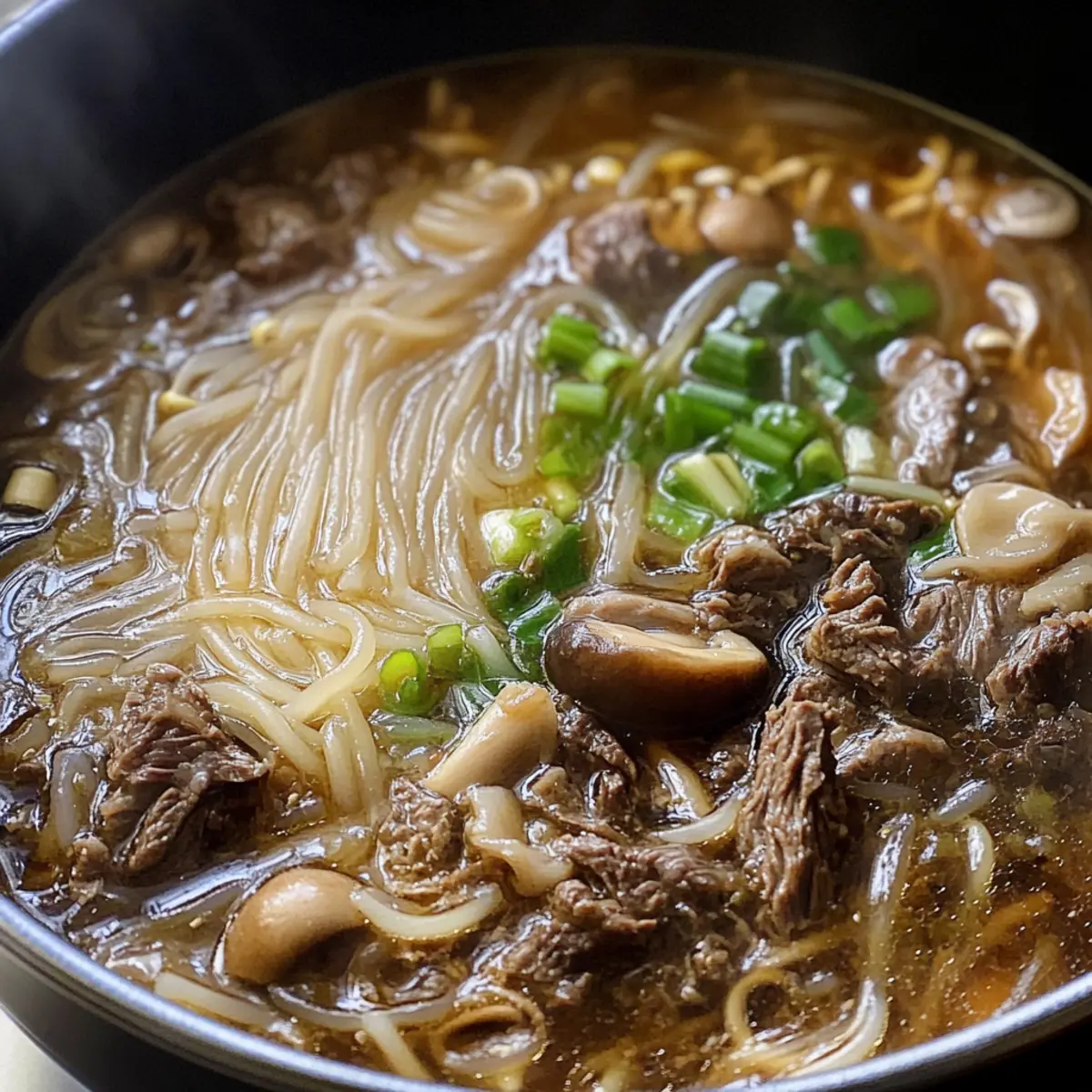
Korean Beef Bulgogi Stew Recipe FAQs
Can I use fresh bulgogi instead of leftovers?
Absolutely! If you’re starting with fresh bulgogi, marinate thinly sliced beef in bulgogi marinade for at least 30 minutes for optimal flavor. This ensures the sweet-savory profile shines through in your stew.
How should I store leftover stew?
Store the stew in an airtight container in the refrigerator for up to 3 days. This helps keep the flavors fresh. Remember to let it cool before sealing. Reheat gently on the stove to maintain the texture of the noodles and broth.
Can I freeze Korean Beef Bulgogi Stew?
Yes, you can freeze the stew for up to 2 months! However, it’s best to freeze the noodles separately. To do this, allow the stew to cool completely, then transfer it to a freezer-safe container. When ready to eat, thaw in the refrigerator overnight and reheat on the stove. Add cooked noodles just before serving.
What if my stew is too salty?
If you find the stew too salty, don’t fret! You can dilute it by adding more water or beef broth. Start with half a cup at a time, stirring well and tasting until it reaches your preferred flavor. Adding a little sugar can also help balance out the saltiness.
Are there any dietary considerations I should be aware of?
If you’re cooking for someone with gluten allergies, ensure your soy sauce is gluten-free and consider using rice noodles as a substitute for glass noodles. Additionally, this recipe contains beef, so consider alternatives for vegetarians, such as tofu or mushrooms, for a plant-based version.
How can I enhance the flavor of the broth?
To elevate the broth’s flavor, consider adding a few slices of ginger or garlic while bringing the broth to a boil. You can also add a splash of soy sauce or a dash of sesame oil during cooking for an added depth of flavor. Don’t forget to taste and adjust the seasoning before serving!
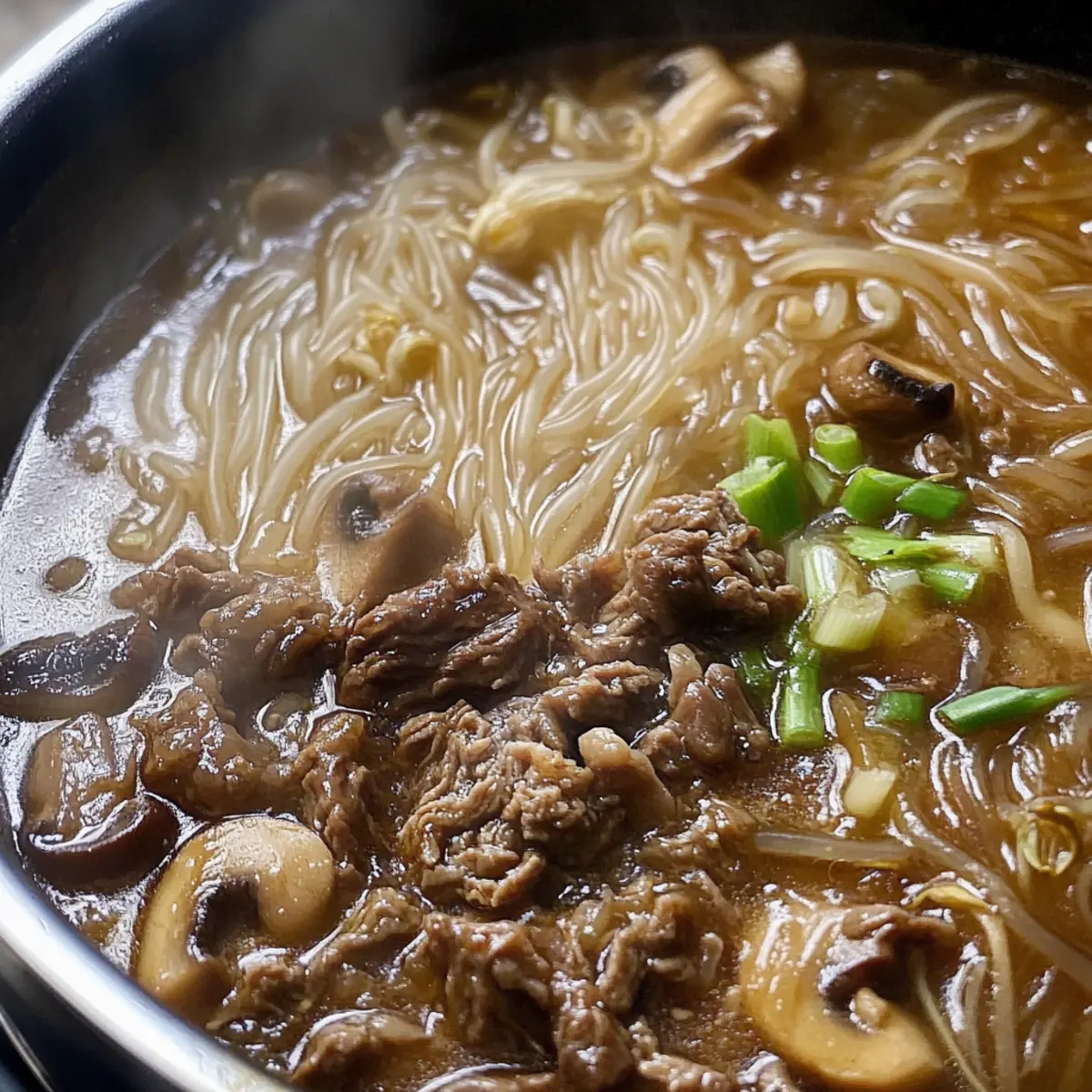
Heartwarming Korean Beef Bulgogi Stew Ready in 30 Minutes
Ingredients
Equipment
Method
- Soak the sweet potato glass noodles in warm water for about 15 minutes, then drain and set aside.
- In a medium pot, heat the leftover beef bulgogi over medium heat for 3-4 minutes.
- Add dark soy sauce and sesame oil to the pot, stirring for 2-3 minutes.
- Pour in 4 cups of water or beef broth and bring to a gentle boil for 5-7 minutes.
- Add the soaked glass noodles and enoki mushrooms, cooking for an additional 3-4 minutes.
- Remove from heat, garnish with chopped green onion, and serve immediately.
Leave a Reply